Springfield, MO · Garage Door Service
Garage Door Opener Installation in Springfield, MO
Opener installation for Springfield MO houses built 1962-2004, where original chain-drive units and cold winters wear differently than newer stock. No invented prices, straight talk.
- Repairs & new doors
- Springs & openers
- Serving 6 nearby communities
What You Pay
We won't quote you a number here, because the right opener for a house depends on things we can't know until we look at the door: the weight of the panel, whether the header is wood or steel, and whether the existing rail and bracket can carry a new motor head or need to be replaced too. What we can tell you is what drives the cost up or down. A belt-drive unit with battery backup costs more than a basic chain-drive, but it's quieter, which matters if the garage sits under a bedroom, common in a lot of the two-story construction built in this area from the 1980s and 90s. Houses with the original 1960s-70s opener bracket sometimes need a header reinforcement before a new unit goes up safely, and that's extra labor, not extra opener. If your current unit is a basic chain-drive from that older stock and still runs the door without grinding or hesitation, replacing just the logic board or remote receiver is sometimes enough, and that's a cheaper job than a full swap. We'll tell you which situation you're in before we quote anything, not after.
Why This Fails Locally
Housing across the service area mostly went up between 1962 and 2004, with the bulk of it dating to the 1980s and 90s, and a good share of those houses still run the opener that came with the garage, not a replacement. Those units were built for a different standard: no rolling code, no battery backup, chain-drive motors rated for lighter doors than the insulated panels a lot of owners have since installed. The climate here is cold-moderate, which doesn't sound dramatic, but it means the chain tension and sensor alignment that worked fine in August start skipping or binding once temperatures drop for good in late fall. That's a different failure than the motor itself dying, and homeowners often replace the wrong part because of it. With 11,041 owner-occupied houses across the service area, a large share built before today's opener brackets and reinforced header framing were standard, a straight motor swap without checking what the opener is bolted to is how you end up back on the schedule in six months.
What the Repair Takes
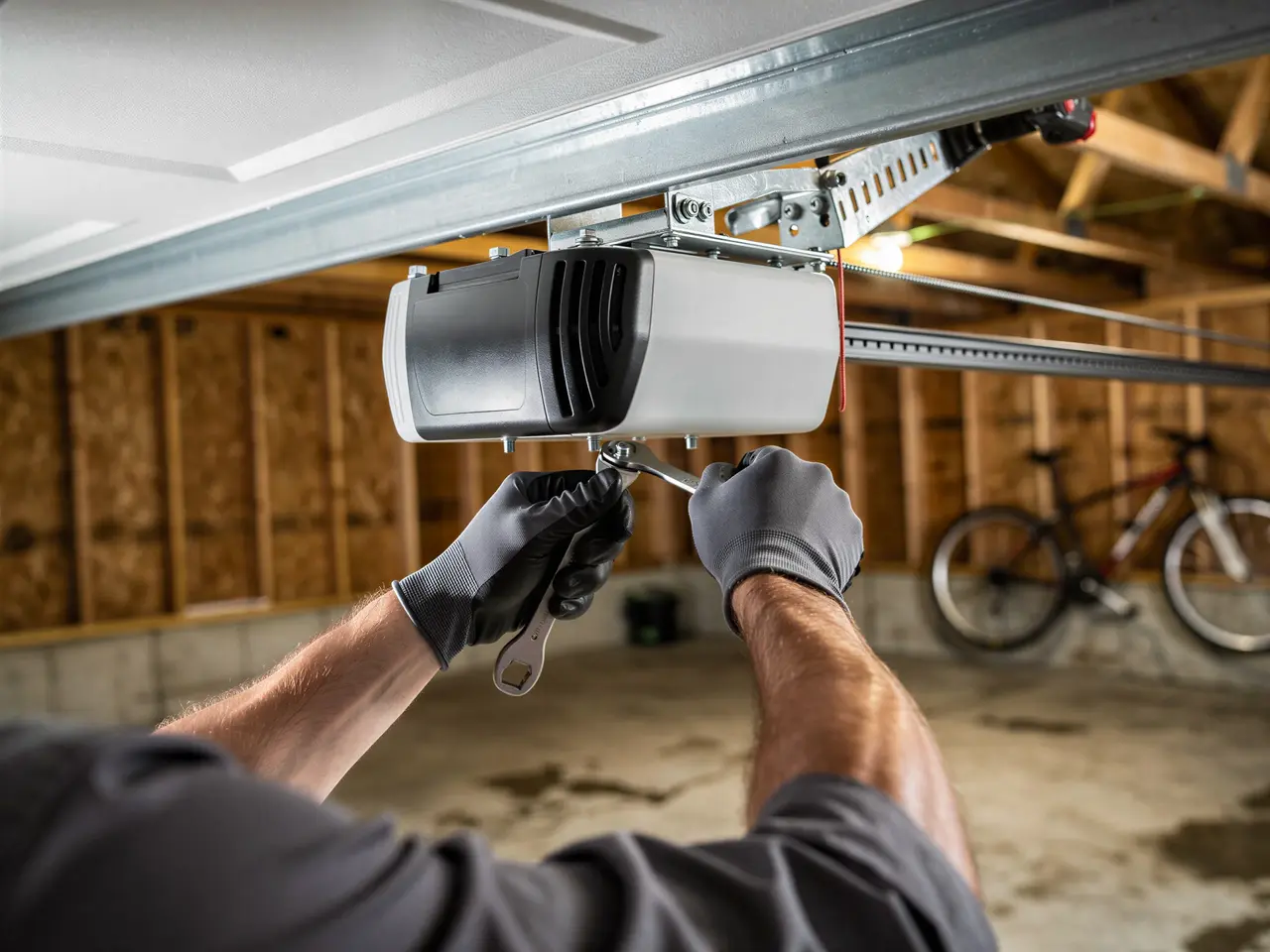
We start by checking the header and track before touching the motor, because an opener mounted to a weak or undersized board will shake loose no matter how good the new unit is. On older houses from the 1962-2004 stock, that sometimes means adding a brace, which we'll flag before we start the main job. Installing the opener itself runs a couple hours for a straightforward swap: mounting the rail, setting the motor head, running the wiring to the wall control and safety sensors, and programming remotes or a keypad. If the existing track or rollers are worn, we'll say so, since a new opener fighting a bad track will burn itself out early and that's not a repair we'll let you pay for twice. One limitation worth knowing upfront: if the door panel itself needs rebuilding or replacing, that's a separate job from opener installation, and we won't bundle it into an opener quote just to make one invoice bigger.
How It Shows Up
Most calls start the same way: the motor runs but the door doesn't move, or it moves partway and reverses. Sometimes it's a remote that's stopped working reliably, which on an older chain-drive unit usually means the receiver board is past its life, not the remote battery. In winter, we see openers that worked fine all fall start grinding or hesitating on the first real cold snap, which points to chain tension and sensor alignment shifting with the temperature rather than a dying motor. On houses from the 1980s-90s stock, a common pattern is an opener original to the house finally giving out after years of light use, so the first sign is often just that it's slower than it used to be, not a dramatic failure. If your door reverses before it reaches the floor, that's a safety sensor issue worth calling about before it stops closing altogether.
Frequently asked questions
How do I know if I need a new opener or just a repair?
If the motor runs but the door doesn't respond right, check the track and rollers first since a worn track can mimic a failing opener. If the unit is original to a house built in the 1962-2004 range and has no battery backup or rolling code, repair parts are often harder to source than just replacing the logic board or the whole unit.
Why does my opener act up more in winter?
Cold temperatures tighten chain tension and can throw off safety sensor alignment, both of which show up as skipping, grinding, or a door that reverses before closing. That's a seasonal adjustment issue, not necessarily a dying motor, and it's common across the service area's cold-moderate climate.
Do you install openers on older garage doors?
Yes, but on houses from the earlier end of the 1962-2004 stock we check the header and bracket first. Some older headers weren't built for today's opener weight and need reinforcement before a new motor goes up, which we'll flag as a separate line item, not hide inside the opener cost.
Related services
By Neighborhood
Opener Installation across the Springfield area
We also handle opener installation in these Springfield-area suburbs.
Book garage door service in Springfield
Call now or request a quote - tell us what the door is doing and where you are.