
Springfield, MO · Garage Door Service
What Cold Does to a Garage Door Spring in Springfield
Springfield, MO homes built mostly in the 1980s and 90s see more cold-weather spring failures; here's what to do before a stuck door leaves you locked out.
- Repairs & new doors
- Springs & openers
- Serving 6 nearby communities
The Situation
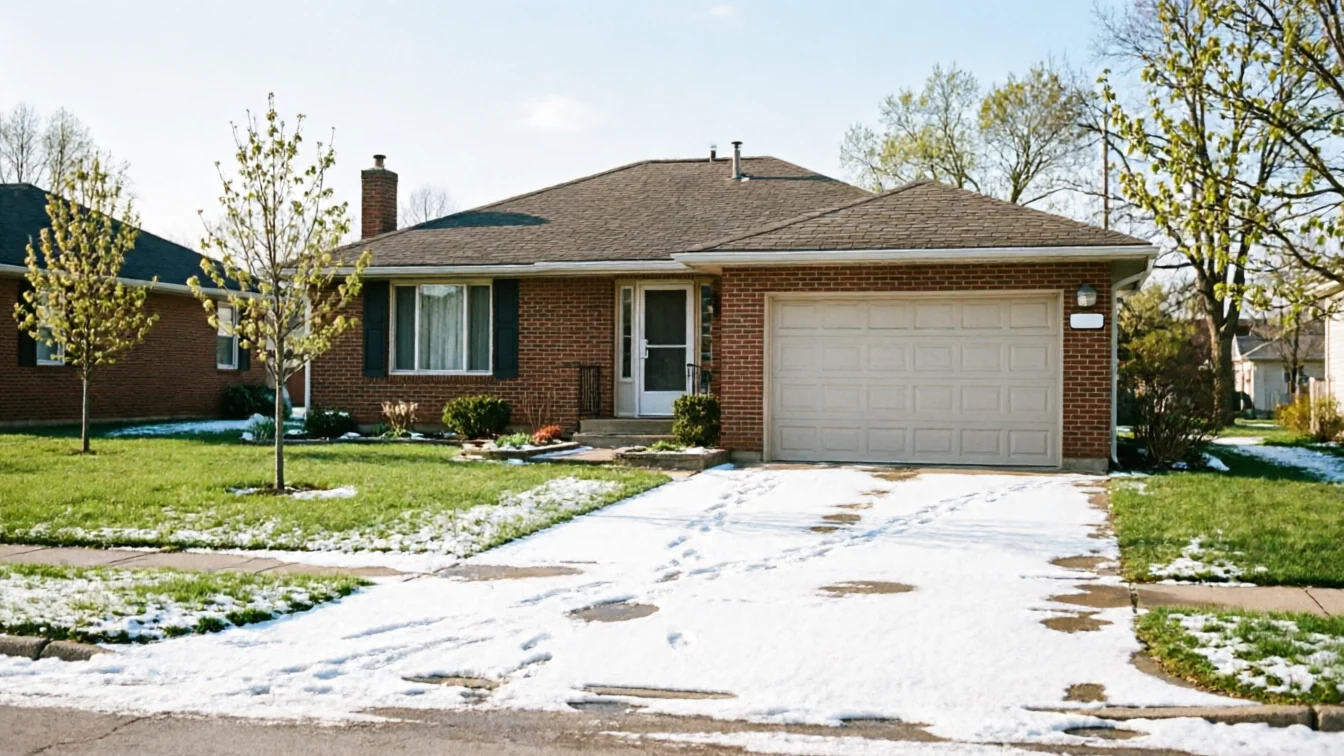
Most of the houses this company works on were built between 1962 and 2004, with the typical home in the service area going up in 1993. That's not a minor detail - it means a huge share of the torsion springs out there are original equipment, now thirty-plus years old, holding up a door that's been opened and closed something like ten thousand times. Across the thirteen named areas we cover, from Fassnight and Oak Grove in close to Doling and Tom Watkins farther out, the stock is overwhelmingly 1980s and 90s construction. Those springs were wound to a spec that assumed normal wear. Nobody wound them assuming three decades of winter temperature swings. When outdoor temperatures drop, steel contracts and loses a measurable amount of tensile give. A spring that was already fatigued from age has less room to flex before it snaps. That's why the call volume for broken springs tracks the cold months here harder than it tracks anything else - not because the springs are bad, but because age plus cold is a specific combination, and this housing stock has both.
Doing Nothing For Now
If a spring hasn't broken yet but the door is making a new noise - a grind on the way up, a shudder at the top of the track - waiting through the cold months is the worst time to wait. A spring under tension that's lost some flexibility doesn't give you much warning before it lets go, and when it does, the door is dead weight on cables. With roughly 11,041 owner-occupied houses across this service area, a large share of them in that same 1980s-90s window, spring failure calls cluster hard in the coldest stretch of the year. That clustering means parts and scheduling get tighter exactly when you need them least. We'll be honest about a limitation here: a worn torsion spring on an older door sometimes reveals a second problem once it's off - a bent shaft, a cracked end bearing plate - and that's not something we can diagnose over the phone. If you're hearing a new sound, get it looked at before the cold snap, not during it.
The Common Mistake
The mistake we see most is lubricant used as a fix instead of a stopgap. Spraying the coils when a spring starts to groan can quiet it down for a week, maybe two, but it does nothing for metal fatigue - it just delays the moment you find out how tired the spring actually is. The second common mistake is assuming a spring that's lasted twenty winters will keep lasting. Houses in this service area built in the 1980s and 90s are old enough now that original hardware is reaching the far end of its practical life, and cold doesn't cause that fatigue so much as it exposes it. A spring that would have held through another mild winter can go in a hard cold stretch instead. The third mistake is calling only after the door won't move at all. By then the cables are usually carrying load they weren't meant to carry alone, and what started as a spring job can turn into a spring-and-cable job. None of this is about scare tactics - it's just the order these parts tend to fail in once the steel's had enough winters on it.
What Local Conditions Do
This area sits in a moderate cold climate band - not the kind of extreme cold that cracks concrete, but consistently cold enough, season after season, to matter for a torsion spring's temper. Steel loses a degree of flexibility as temperature drops, and a spring already worn down by age and open-close cycles has less reserve to absorb that stiffening. That's the mechanism behind the seasonal pattern we see on service calls from Battlefield and Republic seven miles out, Willard at ten, and all the way to Fordland at twenty - the distance doesn't change the physics, but it does mean we're looking at the same era of door hardware across a wide stretch of the region. None of this means every door is on the edge of failure. It means that in houses built in that 1962-2004 window, especially the 1980s-90s majority, cold weather is the condition most likely to turn an aging spring's slow fatigue into a sudden, loud failure - and that's worth knowing before the thermometer drops, not after the door won't open.
Frequently asked questions
Why do more springs break here in winter than in summer?
Steel springs lose some flexibility as temperature drops, and most houses in this service area are old enough - built mostly in the 1980s and 90s - that the original springs are already fatigued from decades of cycles. Cold weather doesn't cause the wear, it just tends to be the condition that finally finishes off a spring that was already near the end.
Can I just lubricate a noisy spring and wait until spring to fix it?
Lubricant can quiet a noisy coil for a short while, but it doesn't restore metal that's fatigued. If the noise showed up recently, treat it as a warning, not a fix, and get the spring looked at before a hard cold stretch finds the weak point for you.
My house is from the 90s - does that matter for the repair?
It can. A lot of houses in this service area were built in that same 1980s-90s window, which usually means original torsion hardware still in place. That hardware is old enough now that age, not just the cold, is often the real reason a spring finally lets go.
Related garage door services in Springfield
More garage door guides
Book garage door service in Springfield
Call now or request a quote - tell us what the door is doing and where you are.