
Springfield, MO · Garage Door Service
Garage Door Installation for Springfield Houses
Installing a new garage door on a Springfield house means matching hardware to what's actually behind the wall. Here's what that looks like across the area's housing stock.
- Repairs & new doors
- Springs & openers
- Serving 6 nearby communities
What You Pay
We don't have a flat number to quote you here, and anyone who gives you one over the phone before seeing your opening is guessing. What drives the cost on a Springfield install is almost always the same three things: the width of the opening, whether the existing track and header need rework, and what's happened to the framing behind the old door. Houses built across this area's main stretch, 1962 through 2004 with the bulk from the 80s and 90s, were framed to a handful of common opening widths, so a straight swap on an unmodified opening is usually the simpler job. Where it gets more expensive is when the old jamb has settled, the header was never sized for an insulated door, or the opening was framed oversized for a style that's no longer made. We'll tell you straight if your house falls into that second group before we quote anything, because guessing wrong on a quote wastes your time and ours. Median household income in the service area runs around $61,607, and most jobs we see land in a range that reflects a working household budget, not a custom build. If a rep tries to sell you add-ons that don't match your opening, that's a sign to get a second look.
Why This Fails Locally
The reason installation jobs cluster the way they do here comes down to the age of the housing stock. A big share of homes across the 13 areas we work in, from Fassnight and Oak Grove out to Doling and Bradford Park, went up between 1962 and 2004, with the heaviest concentration in the 1980s and 90s. Doors from that era were built lighter, with thinner steel skins and little to no insulation, because the energy codes and expectations around them were different. Thirty to forty years in a cold-moderate climate band works that steel and the hardware around it harder than people expect - repeated freeze-thaw swings rack panels, stiffen rollers, and fatigue the torsion springs rated for the original door's lighter weight. So when a homeowner in one of these neighborhoods calls about replacement, it's rarely a single broken part. It's a door built to a 1990s spec sitting on an opening that's now colder-weathered than the door was ever designed for, which is why repair alone often stops making sense.
What the Repair Takes
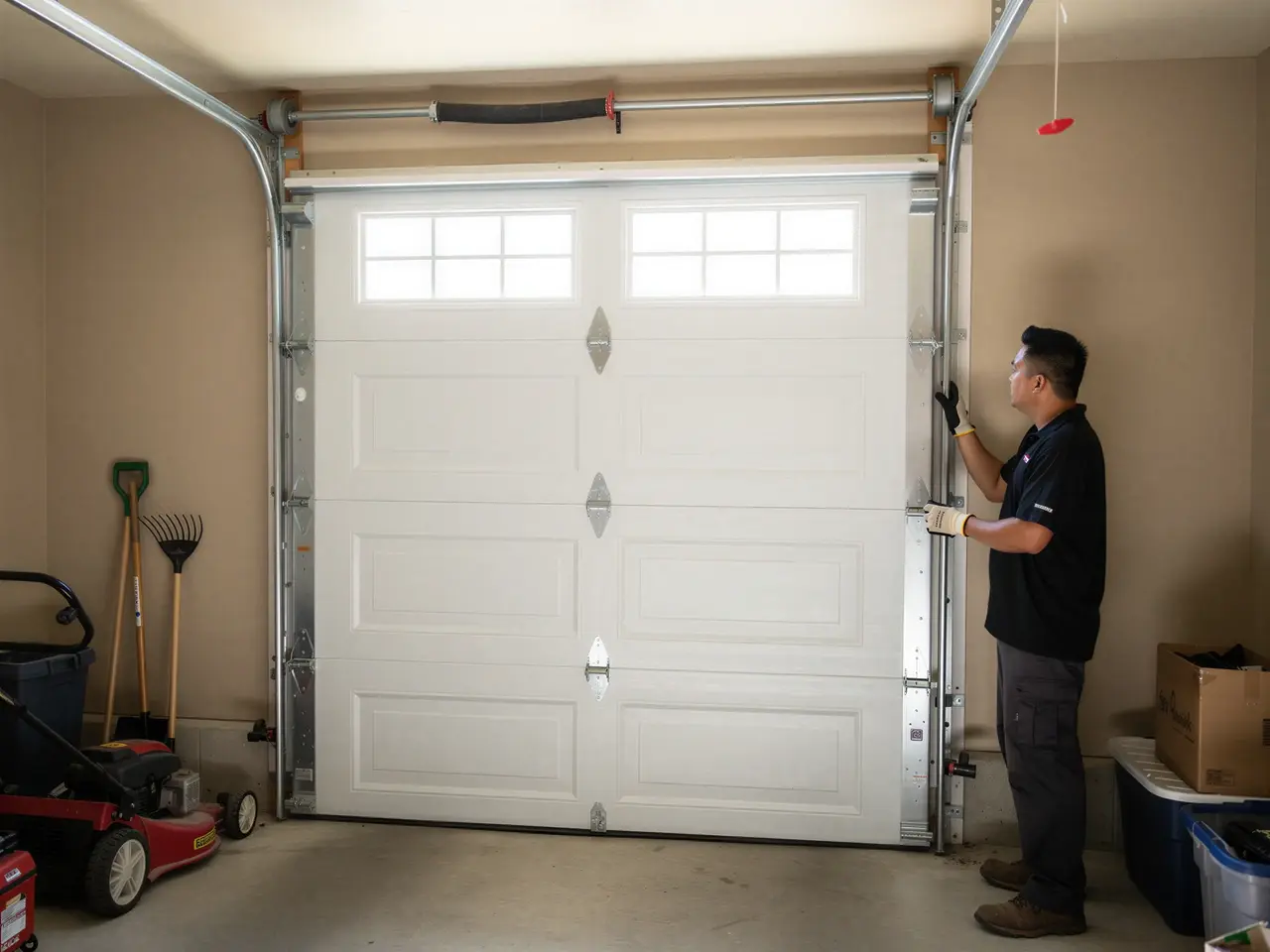
An install on a standard single or double opening with no structural surprises is a same-day job: old door and track out, new door, rollers, and spring system set to the new door's actual weight, opener re-mounted and travel limits reset. Where it takes longer is when the header or jamb needs shoring up, which shows up more often in the older end of the 1962-to-1980s range than in houses built closer to 2004. We size the torsion spring to the door you're installing, not the one that came out - a mismatched spring is one of the most common comebacks in this trade and it's avoidable. One limitation worth saying plainly: if your opening is non-standard or the framing is out of square by more than a small margin, that's a carpentry fix first, and we'll say so rather than force a door into an opening it won't sit right in.
How It Shows Up
Most calls start the same way: a door that's gotten heavy to lift by hand, panels that have started to bow or dent at the bottom corners, or an opener that strains and reverses partway up. On houses from the 80s and 90s stock common across this area, we also see a lot of single-layer steel doors with no insulation, which means the garage runs noticeably colder in winter than the rest of the house - a direct result of the cold-moderate climate here working on uninsulated steel for decades. If your door is original to a house built in that window and you're feeling drafts along the bottom seal or hearing new noise from the springs, that's usually the housing stock talking, not a one-off defect. We serve the Springfield area; see our <a href="/">home page</a> for the full service area.
Frequently asked questions
How do I know if I need a new door instead of a repair?
If your door was installed when the house was built and the house dates to the 1962-2004 range common across this area, the springs and hardware are likely sized for a lighter, uninsulated door that's now decades past its working life. Persistent sagging, rust at the bottom panel, or an opener that strains on every cycle are signs replacement makes more sense than another repair call.
Will a new door fit my existing opening?
Most houses in the service area were framed to standard widths common to 1960s-2000s construction, so a straight swap usually works. Some older openings have settled or were framed for styles no longer made, which we check before quoting.
Does an insulated door matter in a Springfield winter?
Yes. The area sits in a cold-moderate climate band, and a lot of the existing housing stock has single-layer steel doors with no insulation. Replacing with an insulated door cuts the temperature swing in an attached garage noticeably.
What's the most common reason installs get delayed?
Framing issues found once the old door comes down - a header not sized for the new door's weight, or a jamb out of square. That's a carpentry fix we flag before work starts, not something we paper over.
Book garage door service in Springfield
Call now or request a quote - tell us what the door is doing and where you are.