
Springfield, MO · Garage Door Service
Garage Door Repair for Springfield Houses
Springfield garage door repair for 1960s-2000s houses with original torsion hardware and winter-stressed springs. Local service across Springfield, MO and nearby areas.
- Repairs & new doors
- Springs & openers
- Serving 6 nearby communities
What You Pay
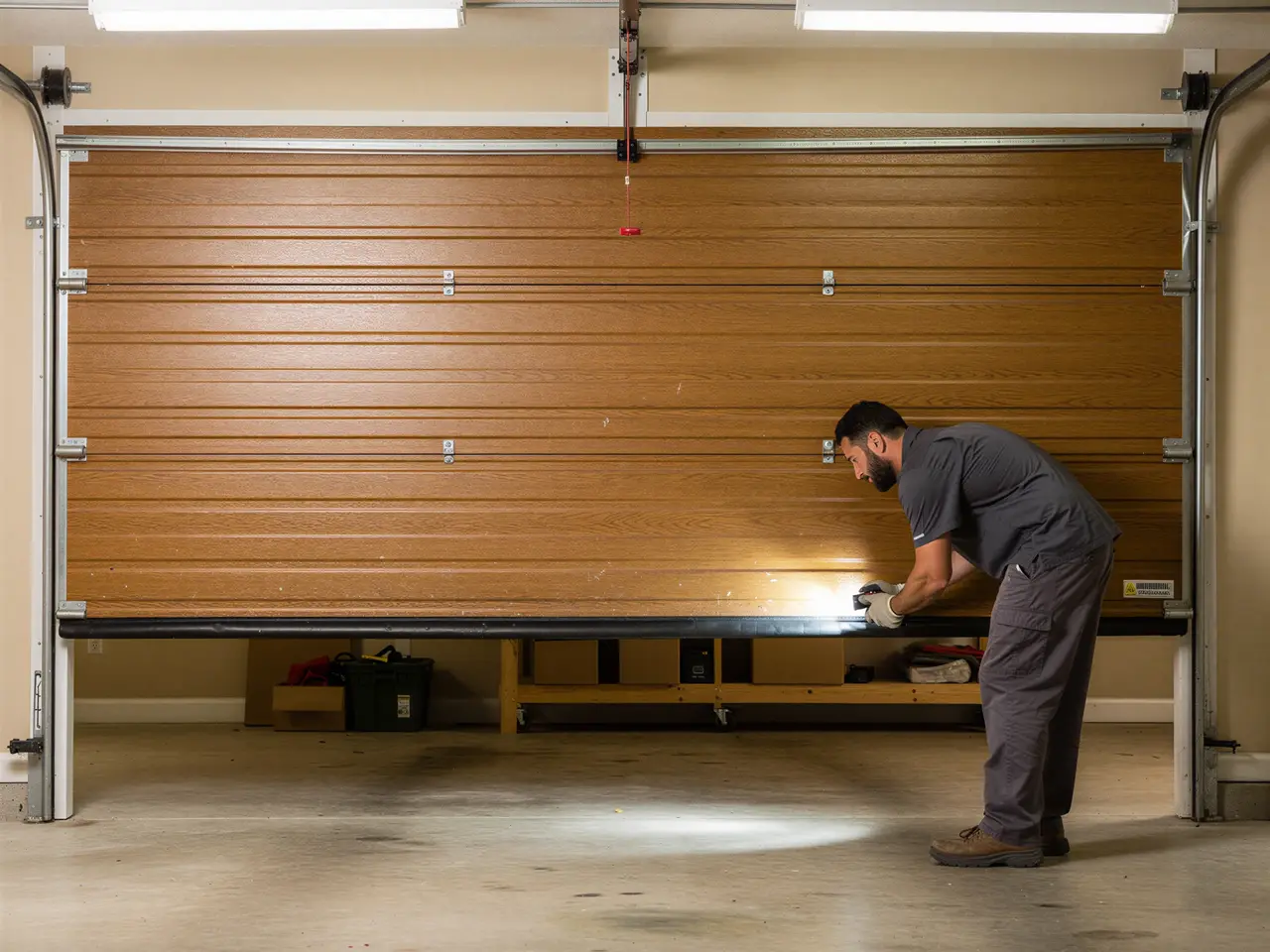
We don't post a flat number here because the job itself decides it. A broken spring on a double door costs less than a bent track plus a burnt-out opener motor, and we won't know which one you've got until we're standing in front of it. What we can tell you is what drives the cost in this area: age of the hardware, whether parts are still made for it, and how much of the system failed at once.
A lot of Springfield houses were built between 1962 and 2004, with most of that stock going up in the 1980s and 90s. That matters for pricing because a door from that window usually still has its original torsion spring and drum setup, which is a straightforward swap. Houses on the older end of that range sometimes carry hardware that's been reworked once or twice already, and figuring out what's actually attached to the header takes longer than the repair itself.
We'll give you a number before we touch anything, not after. If the repair costs more than a comparable new door would, we'll say so plainly instead of running up a bill on a door that's done.
Why This Fails Locally
Most of the housing across this service area dates to the 1980s and 90s, which means a huge share of garage doors here are original equipment pushing three decades of use. Torsion springs are rated for a number of open-close cycles, not a number of years, and a door that's been used daily since the Reagan or Clinton era has burned through that rating regardless of how it looks from the driveway.
The climate does its own damage on top of that. Springfield sits in a cold-moderate band, which means steel springs go through real freeze-thaw swings every winter. Cold steel loses tension and gets brittle at the coil; it's a common pattern for a spring that's held up fine for years to finally let go on the first hard cold snap of the season, not in the dead of summer.
Put those two things together and you get the pattern we see most: original-era torsion hardware, cycled for decades, meeting a climate that stresses metal twice a year instead of none. That's not a flaw in any one door. It's what happens when 1980s and 90s construction meets a place that actually gets cold.
What the Repair Takes
Torsion spring replacement on a standard double door is a contained job once we know the spring size and drum setup, which on a house from the 1980s-2000s stock is usually still the factory configuration. Where it gets longer is diagnosis: a cable that jumped the drum, a bent track from a car bump, and a dying opener motor can all look like "the door won't open" from the kitchen, and each one is a different repair.
One honest limit here: if a torsion spring has been replaced with an undersized or mismatched one somewhere along the way, which happens on older houses that changed hands a few times, we have to re-torque and sometimes re-size the whole system rather than just swap the coil. That adds time and cost, and we won't know until the cover's off.
Parts availability is the other factor. Standard sizes for doors from this era are stocked and go same-visit. Anything custom, or a panel for a less common door width, can mean a return trip while we order it in. We'll tell you which situation you're in before we start, not after we've already pulled the old spring.
How It Shows Up
The door won't open past a few inches, or it slams down the last two feet instead of lowering smooth - that's a spring that's lost tension, and on a Springfield house built in that 1980s-90s window, it's almost always the original torsion spring finally giving out. A loud bang from the garage followed by a door that won't budge at all is the spring snapping outright, usually on a cold morning when the steel's tightest.
A door that opens unevenly, with one side dropping faster than the other, points to a cable off the drum rather than the spring itself - different repair, same symptom from the driveway. And an opener that hums but doesn't move the door is worth checking before you assume it's the motor; sometimes it's the door itself binding on a bent track, and the opener is just doing what it's told against resistance it can't overcome.
If your door is original to a house built anywhere in that 1962-2004 range and you haven't had the spring looked at, cycle count alone is a reason to get it checked before it fails on its own schedule.
Frequently asked questions
Why did my garage door spring break in winter and not summer?
Cold steel loses tension and gets more brittle at the coil. Springfield sits in a cold-moderate climate band, so torsion springs go through real seasonal swings every year. A spring that's been cycling for decades on a 1980s or 90s house is already near the end of its rated life, and a hard cold snap is often what finally takes it past that point.
Is it worth repairing an original door from the 1980s or 90s?
Usually yes for the spring and cable hardware, since standard sizes from that era are still stocked and the repair is straightforward. It's a different call if the opener, track, and panels are all failing at once - at that point we'll tell you plainly if a new door costs less than stacking repairs on an old one.
Do you give a price before starting the repair?
Yes. We look at the specific failure first, because a spring swap, a bent track, and a burnt opener motor cost different amounts and we won't guess over the phone. You get a number before any work starts, not an estimate that changes once the cover's off.
By Neighborhood
Garage Door Repair across the Springfield area
We also handle garage door repair in these Springfield-area suburbs.
Book garage door service in Springfield
Call now or request a quote - tell us what the door is doing and where you are.