
Springfield, MO · Garage Door Service
Panel Replacement for Battlefield's Newer Garage Doors
Battlefield homes run newer than most of the Springfield area, mostly built around 2000, which changes what panel work looks like. We drive out from Springfield for the job.
- Repairs & new doors
- Springs & openers
- Serving 6 nearby communities
Where This Job Goes Sideways
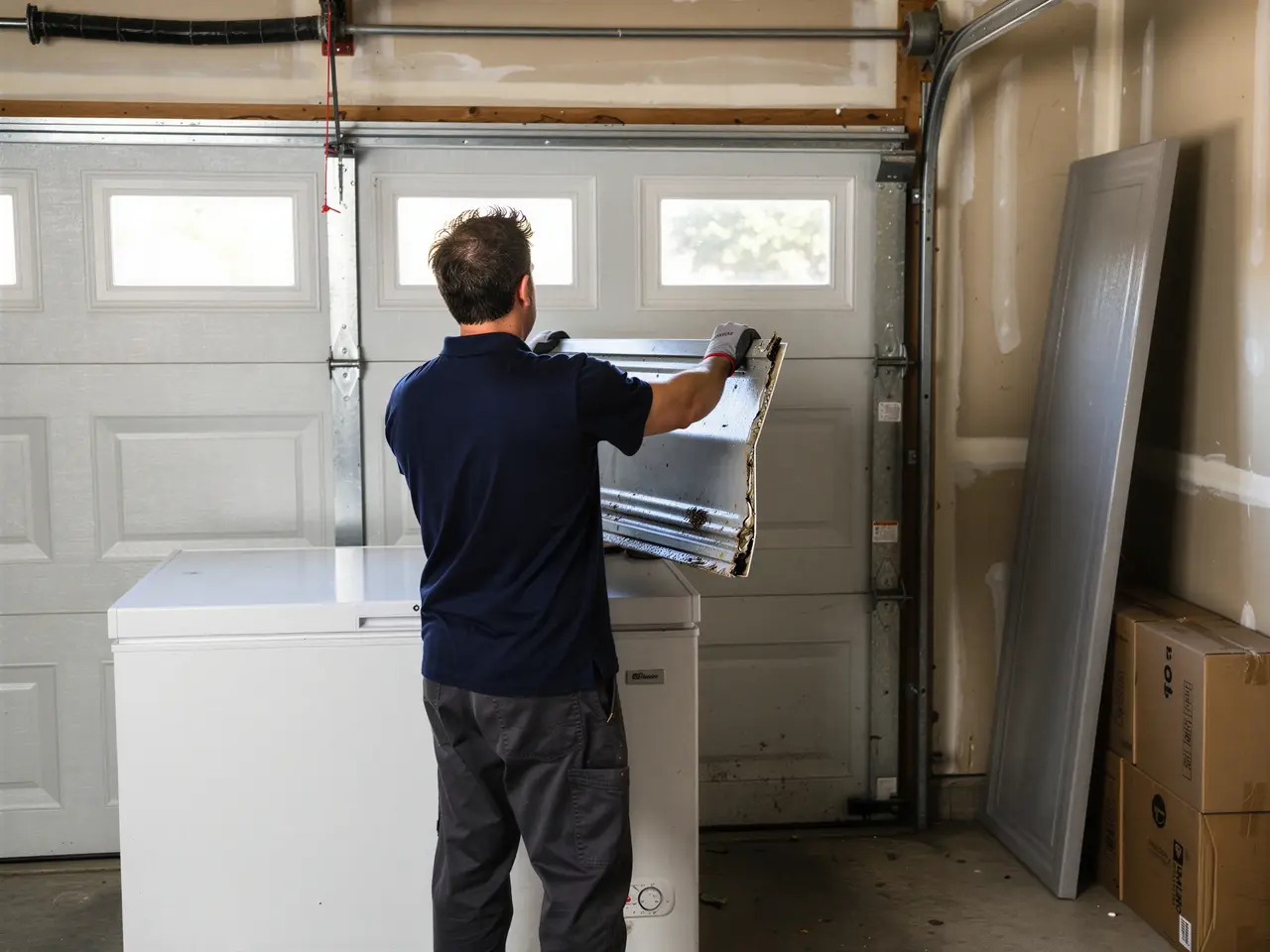
Most of the houses we see out in Battlefield went up around 2000, which puts this town a decade or more newer than a lot of the stock closer into Springfield, where the area median sits around 1993 and plenty of blocks go back to the early 1960s. That matters for panel work because a door from 2000 is almost always a wide steel sectional, 16 feet across for a two-car opening, built with a polystyrene or polyurethane core sandwiched between two steel skins, not the narrow single-layer steel or old wood doors you'd find on an older street. The job goes sideways when one panel on a wide door gets cracked or dented and the owner assumes we can just swap that one section. On a lot of these builder-grade doors, the exact panel profile was discontinued years ago even though the door itself is barely old enough to need work, and matching color and ribbing across new and old steel is never a sure thing. Sometimes the honest answer is that a single panel swap will look wrong next to twenty-plus-year-old factory paint, and the better move is replacing both panels on that side or the whole door. We'll tell you which one it is before we order anything, not after.
Booking a Visit
We run out of Springfield to cover Battlefield, about 7 miles down the road, so there's no local branch or drop-in counter here. A visit means we schedule a truck out to your address, look at the actual panel and door model, and quote the fix on the spot rather than guessing over the phone. Because Battlefield's housing is newer and more uniform than a lot of the service area, odds are better that we're dealing with a common double-car steel door rather than a one-off older model, which usually means fewer surprises on parts. We'll ask for the door's brand and model number if it's visible on the inside of a panel or the end stile, since that tells us in advance whether we're ordering a stock panel or dealing with something custom.
Parts We Carry
For a door built around 2000, we're usually looking at insulated steel sectional panels, either polystyrene or polyurethane foam core, in the standard 16x7 or 16x8 double-car sizes that builders used across this part of the area through the 1990s and 2000s. We stock common panel sizes and the matching end hinges, hardware, and weatherstrip retainers that go with that era of door. What we don't carry on the truck is an exact color or texture match for every builder-grade door ever installed, since paint runs and embossing patterns changed year to year even within the same manufacturer line. If an exact match isn't possible, we'll say so and lay out the choice: order the closest match and accept some visible difference, or replace enough panels that it reads as one door again.
How It Shows Up
On a door this age, panel damage usually starts as a dent from a car bumper or a basketball, not rot or rust-through the way you'd see on an older wood door. The steel skin dents inward, the foam core behind it stays intact, and the door still runs on the track for a while before the dent starts catching a roller or pulling the panel seam loose. Winters here fall into a cold, moderate climate band, and repeated freeze-thaw cycling on a dent's stress point is usually what finally cracks the seam or lets water track behind the steel. You'll notice it as a panel that no longer sits flush against its neighbors, a seam that whistles in wind, or a corner that's started to bow when the door is down. None of that is an emergency the way a snapped cable is, but it doesn't improve on its own either.
The DIY Question
A lot of Battlefield owners are handy enough to swap a roller or tighten hardware, and on a newer steel door some of that is reasonable to do yourself. Panel replacement is different: the panels are bolted to hinges that carry spring tension and track alignment, and pulling the wrong one on a loaded door can let the whole section drop. We also can't promise a DIY-ordered panel will match your door's existing color or profile, since most online panel listings don't specify the subtle differences between builder-grade lines from this era. If the damage is cosmetic and low on the door, away from hinges and the opener arm, it's fair to live with it a while and save for the fix. Once a panel is cracked at a hinge point or a seam has separated, that's not a patch job anymore.
Frequently asked questions
Why can't you just replace the one dented panel on my door?
On a lot of builder-grade doors from the 2000 era, the exact panel profile or paint run is no longer made. We can usually find a close match, but if the color or embossing is off next to twenty years of factory paint, replacing one more panel on that side often looks better than a single mismatched swap.
Do you have a shop in Battlefield?
No. We're based in Springfield and drive out to Battlefield, about 7 miles away, for every job. There's no local counter or depot here, just a scheduled truck visit once we've got your door's details.
Is a dented panel urgent?
Usually not right away. A dent that hasn't cracked the seam or caught a roller can wait while you plan the fix. Once the seam separates or the dent sits near a hinge, waiting risks the panel pulling loose under spring tension.
More garage door services in Battlefield
Book garage door service in Springfield
Call now or request a quote - tell us what the door is doing and where you are.